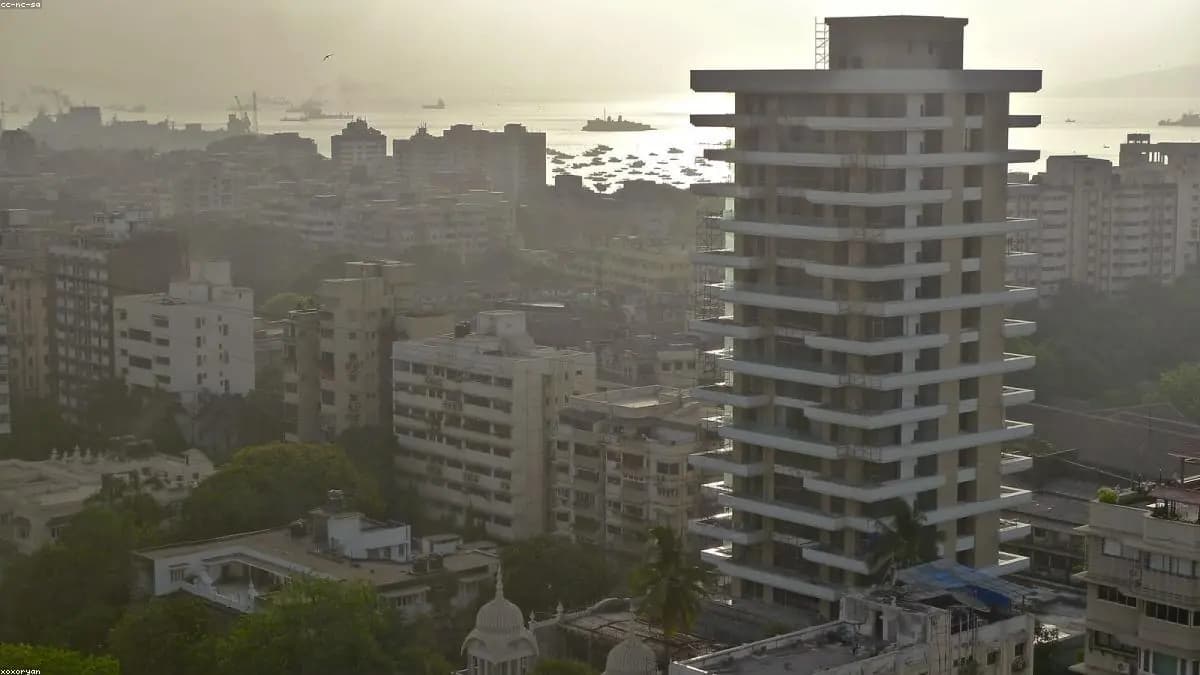
Investing in Mumbai Real Estate: The Island City's 2025 Comeback
Mumbai, often called the "City of Dreams," has long been the most expensive real estate market in India. For years, critics have called it saturated, unaffordable, and crumbling under its own weight. Yet, in 2025, Mumbai is staging a spectacular comeback. Driven by an unprecedented infrastructure overhaul worth over ₹1 Lakh Crore, the city is Discovering new land parcels and redefining connectivity. The narrative has shifted from "Mumbai is dying" to "Mumbai is evolving."
For an investor, Mumbai offers something no other Indian city can: Resilience. Property prices here rarely crash; they plateau and then surge. But the game has changed. It is no longer just about South Bombay or Bandra. The real action has shifted to the suburbs and the peripheral corridors. In this 2000-word guide, we analyze the "New Mumbai" and identify where the smart money is flowing, breaking down the impact of mega-projects like the Coastal Road and MTHL.
1. The Infrastructure Catalyst: Rewriting the Map
Geography was Mumbai's biggest enemy—a linear city constrained by the sea. New infrastructure is turning this weakness into a strength by connecting the unconnected.
The Mumbai Trans Harbour Link (MTHL / Atal Setu)
This 21.8 km sea bridge has connected the island city (Sewri) to the mainland (Nhava Sheva) in 20 minutes.
Impact: It has effectively created a "Third Mumbai" in Ulwe and Dronagiri. Prices in these areas have already appreciated by 30% in the last 2 years, but they are still affordable compared to Vashi or Panvel.
Investment Tip: Look for land parcels or under-construction townships in Ulwe. As the new Navi Mumbai International Airport becomes operational, this area will explode. It is the Gurgaon of Mumbai.
The Coastal Road (Phase 1 & 2)
Connecting Marine Lines to Kandivali, this project is de-congesting the Western Express Highway.
Impact: It is reviving the charm of Western Suburbs like Versova and Malad, making commute times to Nariman Point manageable again. The premium on "Sea View" properties in these areas is rising as the promenade becomes a lifestyle hub.
Metro Network (The Spider Web)
With Lines 2A, 7, and the underground Line 3 (Aqua Line) fully operational, Mumbai finally has a true mass transit alternative to the local train.
Impact: Areas around metro stations (TOD - Transit Oriented Development) command a 15% premium. Micro-markets like DN Nagar and Powai are big beneficiaries. The Aqua Line has specifically boosted values in SEEPZ and Marol by connecting them to BKC and Cuffe Parade.
2. Redevelopment: The New Goldmine
With no open land left in the city, the only way is up. Redevelopment is the buzzword of 2025. It is the primary source of new inventory in established areas.
The Society Redevelopment Wave
Old cooperative housing societies in Chembur, Ghatkopar, and Goregaon are being demolished to make way for high-rise luxury towers.
The Opportunity: Buying an old flat in a dilapidated building (with high carpet area) is a high-risk, high-reward strategy. When the building goes for redevelopment, you get a brand new flat with 30-40% extra area and modern amenities.
The Risk: Stalled projects. Make sure the developer chosen by the society has a rock-solid track record (e.g., Godrej, Oberoi, Rustomjee). Avoid small-time builders who depend on presales to fund construction.
The SRA (Slum Rehabilitation Authority) Factor
Mumbai has vast tracts of land under slums. SRA projects offer apartments at 40-50% discount to market rates.
Warning: SRA flats have a 10-year lock-in period where they can't be sold. Many investors buy them on "Power of Attorney," which is legally risky. Stick to the "Free Sale" component of SRA projects, which is legal and safe, though priced higher.
3. Top Investment Micro-Markets in 2025
Where should you put your money? Here are the top picks based on ROI potential.
Chembur: The Central Connector
Once an industrial suburb, Chembur is now the most connected point in Mumbai, linking the Eastern Freeway, SCLR, and Monorail.
Why Invest: It offers the greenery of old Mumbai with the connectivity of the new. It is a favorite for premium 3 and 4 BHKs for senior executives working in BKC.
Thane: The City Within a City
Thane is no longer a "distant suburb." It is a thriving ecosystem with malls, schools, and lakes.
Why Invest: It offers a "lifestyle" that cramped Mumbai apartments can't match. Integrated townships in Thane (like Hiranandani Estate) offer great rental yields from families. The upcoming Metro to Thane will further boost connectivity.
Kandivali & Borivali
Traditionally Gujarati strongholds, these areas are seeing a makeover with high-end skyscrapers replacing old chawls. The connectivity to the business hubs of Goregaon and Malad makes them safe bets for end-users. The new link roads and metro have solved the traffic woes significantly.
4. Budget vs. Luxury: Where is the Value?
Luxury (> ₹5 Cr): South Mumbai (Worli, Lower Parel) has seen price stagnation. It is a buyer's market. You can negotiate hard and get good deals. Inventory overhang is high here.
Mid-Segment (₹1.5 Cr - ₹3 Cr): This is the sweet spot. Demand is insatiable in suburbs like Mulund, Vikhroli, and Malad. Liquidity is high here—you can sell easily within 3-4 months.
Affordable (< ₹80 Lakhs): You have to move to Dombivli, Vasai, or Panvel. While appreciation is slow, the entry barrier is low. These are volume markets driven by first-time buyers.
5. The Rental Reality check
Mumbai has the lowest rental yields in India, typically 2% - 2.5%.
Why? Property prices are astronomically high. A ₹3 Crore flat might rent for only ₹60,000.
The Exception: "Boutique" 1 BHKs or Studio apartments near BKC (Bandra Kurla Complex) or Andheri East. These cater to young professionals and can yield up to 4%. Co-living operators also offer better yields if you lease to them.
6. Legal Pitfalls specific to Mumbai
Mumbai's real estate laws are complex. Watch out for:
Pagdi System: Avoid buying Pagdi properties unless you're an expert. You don't get full ownership; you're just a "tenant" with transfer rights. Banks don't lend on Pagdi properties.
CRZ (Coastal Regulation Zone): Make sure the project isn't violating CRZ norms if it's sea-facing.
Forest Land: In areas near Sanjay Gandhi National Park (Mulund/Borivali), verify the land isn't encroaching on forest territory.
The "Loading" Scam
Mumbai developers are infamous for high loading (40-50%). Always ask for the RERA Carpet Area. Do not pay for "Super Built-up Area." If a builder quotes ₹20,000 psf on Super Built-up, calculate what it costs on Carpet Area—it might be ₹35,000 psf! Compare projects strictly on Carpet Area cost.
Conclusion
Investing in Mumbai isn't for the faint-hearted. It requires capital, patience, and due diligence. Though, the returns—both in terms of capital appreciation and social status—are unmatched. With the infrastructure boom of 2025, the "City of Dreams" is waking up to a new dawn. If you have the budget, there is no safer place to park your wealth than in Mumbai real estate. Just remember: In Mumbai, you pay for time, not just space.
7. The Dharavi Redevelopment Project: The Adani Effect
The ₹23,000 Crore redevelopment of Dharavi by the Adani Group is set to change the geography of Central Mumbai. Spanning 600 acres, this project won't only rehabilitate slum dwellers but also release massive land parcels for free-sale commercial and residential use.
Impact on BKC: Dharavi is right next to Bandra Kurla Complex (BKC). Once redeveloped, the supply of premium offices and luxury housing will skyrocket, potentially rationalizing prices in BKC but boosting prices in surrounding areas like Sion and Mahim.
Timeline: While legal hurdles remain, the survey work has begun. Investors with a 10-year horizon are buying in Sion and Chunabhatti, anticipating a "Dharavi Uplift."
8. Navi Mumbai International Airport (NMIA): The Game Changer
Scheduled to be operational by March 2025, the NMIA in Panvel isn't just an airport; it's an economic engine. It will handle 20 million passengers in Phase 1.
The "Aerocity" Concept: Just like Delhi's Aerocity, the area around NMIA will see a boom in hotels, convention centers, and malls. This will create thousands of jobs, driving demand for housing in Ulwe, Dronagiri, and Panvel.
Connectivity: The airport will be connected to Mumbai via the MTHL and the Metro Line 1. This seamless connectivity solves the biggest hurdle Navi Mumbai faced—distance.
9. Rent vs. Buy in Mumbai: The Eternal Debate
In a city where rental yields are 2% and home loan interest rates are 8.5%, does buying make sense?
The Math says Rent: purely financially, renting is cheaper. You can invest the difference in mutual funds and beat real estate returns.
The Heart says Buy: In Mumbai, landlords are notorious. Frequent shifting, high brokerage, and restrictions on food/pets make renting a hassle. Buying is a "Lifestyle Cost," not just an investment. It buys you stability, social standing, and peace of mind.
The Hybrid Strategy: Rent in the city (near work) to save commute time, but buy a property in a developing suburb (like Thane or Ulwe) for investment. This way, you enjoy city life while your asset grows in the background.