How to Check Property Ownership Online in Maharashtra
Buying or selling a flat, plot, or house in Maharashtra without verifying ownership is risky. A single missed step can trap you in legal disputes for years. The good news is that the Government of Maharashtra has digitized most land and property records. With a few careful checks on official websites, you can confirm who really owns a property and whether the details match the paperwork shown to you.
This guide explains, in simple language, how to use the state’s online systems to verify property ownership. The focus is on practical steps about where to click, what to download, and how to read the entries—especially for buyers in cities like Mumbai, Pune, Thane, Navi Mumbai, Nagpur, and smaller towns across Maharashtra.
1. Understand Which Record You Actually Need
Different parts of Maharashtra follow slightly different formats for property records. Before opening any website, you should know which document applies to your case. This makes the entire process faster and avoids confusion.
Key record types in Maharashtra
- 7/12 Extract (Satbara Utara): Used mainly for agricultural and village lands. It shows survey number, area, crop details, and names of holders.
- Property Card (Malmatta Patrak): Used for city and non-agricultural plots. It records the history of ownership, area, and remarks about reservations or road widening.
- Index II (Document Index): Issued by the registration department for each registered sale deed, gift deed, or transfer document. It captures buyer, seller, property description, and value.
- CTS / City Survey Extract: Used in urban areas to identify land parcels by City Survey number instead of only survey numbers.
In many real-life transactions, you will need to see a combination of these, not just one. For example, when buying a flat in Pune, you may check the property card for the underlying land and Index II for your specific flat’s sale deed.
2. Use MahaBhulekh to View 7/12 Extract and Property Card
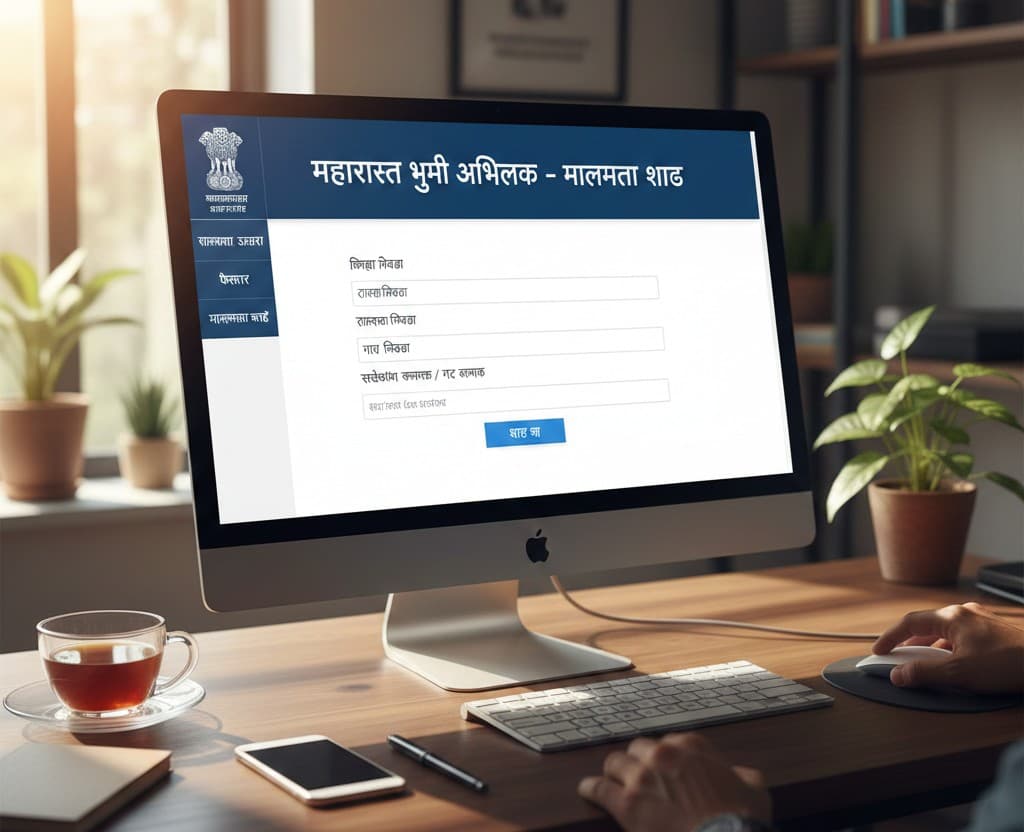
The main government portal for land records in Maharashtra is MahaBhulekh (Maharashtra Bhumi Abhilekh). This site provides digital copies of 7/12 extracts and property cards for most districts.
Step-by-step: Access 7/12 extract online
Follow these steps to verify property ownership for village or semi-urban land:
- Open the official MahaBhulekh website in your browser.
- Select the correct region for your property (for example, Pune, Konkan, Nashik, Aurangabad, Amravati, or Nagpur division).
- Choose the option for 7/12 extract (Satbara) on the landing page.
- Select the district, taluka, and village from the dropdown lists.
- Enter one of the available search parameters—survey number, group number, first name, last name, or full name of the holder.
- Click on “Search” and then select the correct entry from the results list.
- View the full 7/12 extract and download the PDF for your records.
On the 7/12 extract, confirm that the owner’s name, survey number, and land area match the details shown in the sale deed or title documents shared with you. If the name is different or the area does not match, treat this as a red flag and ask for a clear explanation from the seller and their lawyer.
Step-by-step: Access property card online
For city properties, especially in municipal areas, you will often use the property card instead of the 7/12 extract:
- Visit the same MahaBhulekh portal and choose the option for Property Card (Malmatta Patrak).
- Select the district and taluka that covers your city or town.
- Search using CTS number, survey number, or other options provided on the screen.
- From the list of results, pick the property that matches the details given in your documents.
- Open the property card and download the PDF version.
On a property card, focus on the owner’s name, area, remarks section, and any notes about reservations, encroachments, or government acquisition. When ownership has changed, older names are often struck out and new names are written, so read the entire column carefully.
3. Check Registered Documents Using IGR Maharashtra (Index II)
While MahaBhulekh focuses on land records, the Inspector General of Registration (IGR) portal records all registered documents like sale deeds, gift deeds, and mortgages. This is where you verify whether the sale deed for a particular flat or plot was actually registered and in whose favour.
Step-by-step: Search Index II online
- Open the official IGR Maharashtra website in your browser.
- Navigate to the section for online search of Index II or “e-Search” depending on the current layout.
- Select the district where the property is located. For example, choose Pune for Kothrud, Hinjewadi, or Wagholi properties.
- Pick the appropriate search type—by property details, by name, or by registration number.
- If you have the document registration number and year (often printed on the first page of the sale deed), enter those details for the most accurate result.
- Submit the form and wait for the search results to load.
- Open the specific Index II entry that matches your document and download the PDF.
In the Index II document, confirm the following points carefully:
- The seller’s name and buyer’s name are exactly as expected, without spelling errors that could indicate a different person.
- The property description includes building name, flat number, floor, and area close to the sale deed.
- The consideration amount (value) is similar to what the seller is claiming. Large differences could mean you are being shown a different document.
If the seller claims that a sale deed was registered but you cannot find any matching Index II entry, pause the transaction and ask them to clarify with their advocate. Sometimes older documents are not fully digitized, but in most recent cases the record will appear online.
4. Match Online Records with Society and Municipal Details
In cities like Mumbai, Pune, and Thane, the land record is only one layer of ownership. For flats in housing societies, you also need to match the online information with society and municipal entries. This ensures that the person selling the flat is recognized as the owner not just in the land record but also in the building’s internal records.
Housing society checks
- Request a copy of the share certificate from the seller and verify that the name and flat number match your expectations.
- Visit or call the society office and confirm that the seller is recorded as the current member and that there are no major disputes noted in the society’s records.
- Check if there are any society dues pending, because these often need to be cleared before the transfer can be completed.
Municipal and tax checks
- Ask for the latest property tax receipt from the relevant municipal corporation or council.
- Verify that the owner’s name on the tax bill matches the seller or that there is a documented reason for any variation.
- Confirm that water and other local taxes are paid up to date so that you are not surprised later.
When the names on the 7/12 extract or property card, Index II, share certificate, and municipal tax receipts all point to the same person or logical sequence of transfers, it is a strong indicator that the ownership trail is clean.
5. Common Red Flags to Watch Out For
Online records make it easier to detect warning signs early. While checking property ownership in Maharashtra, pay attention to these patterns and avoid rushing into a deal when something feels unclear.
Ownership related issues
- The name on MahaBhulekh or the property card is different from the seller’s name and there is no clear explanation or supporting document.
- Several names are shown as holders on the 7/12 extract, and only one of them is signing the agreement without a power of attorney or consent from others.
- The Index II shows a recent sale to someone else, but the person approaching you is not that buyer.
Technical and legal flags
- Remarks on the property card mention acquisition, reservation, or road widening that the seller has not disclosed.
- There is an obvious mismatch between the area mentioned in the sale deed and the area shown on the land record.
- The seller insists on rushing registration without giving you time to cross-check documents online.
Whenever you see any of these signs, pause and consult a local property lawyer who regularly handles transactions in Maharashtra. A short legal opinion at this stage can prevent major losses later.
6. Best Practices for Safe Online Verification
Government portals are powerful tools, but they are only one part of due diligence. Following some simple best practices will help you use these portals safely and get the most reliable picture of the property’s status.
Use official websites and secure connections
- Always type the official URL yourself or use bookmarked links rather than clicking on random search results or advertisements.
- Check for the secure “https” connection in the browser address bar before entering any personal details.
- Download PDFs directly from the portal instead of relying on screenshots sent by intermediaries.
Keep copies and note reference details
- Save downloaded 7/12 extracts, property cards, and Index II documents in a safe folder and back them up.
- Note the date and time when you accessed each record so that you have a reference if you need to show your bank or lawyer.
- Print physical copies for file records, especially if you are applying for a home loan where the bank may ask for supporting evidence.
Remember that online records are usually updated, but not always in real-time. For large or complex deals, combine online checks with a formal title search through an experienced advocate.
Conclusion
Checking property ownership online in Maharashtra is no longer a complicated task reserved only for lawyers or brokers. With portals like MahaBhulekh and IGR Maharashtra, any buyer or owner can access key records in a few minutes—provided they know what to look for and how to interpret it.
When you confirm ownership through 7/12 extracts or property cards, cross-check registered documents via Index II, and match these details with society and municipal records, you drastically reduce the chances of fraud. For serious buyers in Maharashtra’s busy markets, this disciplined process should become a habit, not a formality.
Before you pay a token amount or sign an agreement, take the time to walk through the steps in this guide. If anything does not match, slow down and ask questions. A clear, verified ownership trail is the strongest foundation for a safe property investment anywhere in Maharashtra.