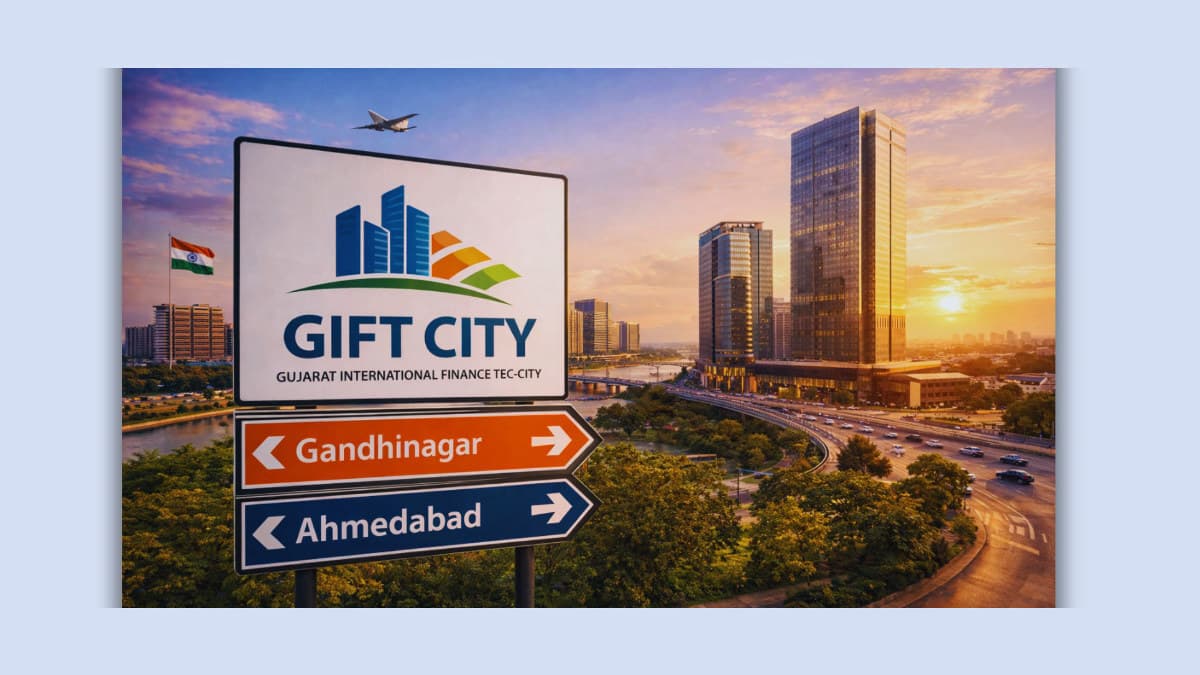
If you walk into any high-end real estate office in Ahmedabad or Mumbai today, you will hear one name whispered with reverence: GIFT City. The brochures are glossy, showing glass skyscrapers that look like Singapore, clean streets that look like Dubai, and a lifestyle that promises to be the "Future of India." But as someone who has spent the last decade analyzing the Gujarat real estate market, I know that computer-generated images do not tell the full story.
Is GIFT City (Gujarat International Finance Tec-City) truly the best place to park your hard-earned ???1 Crore? Or is it a "Smart City" bubble waiting to burst? The answer is not a simple yes or no. It depends entirely on who you are???a flipper looking for quick cash, a long-term investor seeking rental yield, or an end-user actually planning to live there.
In this comprehensive guide, we will strip away the marketing hype and look at the ground reality of buying property in GIFT City in 2026. We will cover the critical differences between SEZ and DTA zones, the truth about "Walk to Work," the actual rental yields you can expect, and the hidden risks that no broker will tell you.
1. Understanding the Geography: SEZ vs. DTA (The Big Decision)
Before you even look at a floor plan, you must understand that GIFT City is not one single entity. The area is legally divided into two distinct zones, and buying in the wrong one can be a financial disaster for an uninformed retail investor.
The Special Economic Zone (SEZ)
The SEZ is the "Export" zone. It is designed for companies that export services (like IT, global banking, and financial services) and earn in foreign currency. For years, residential property ownership here was heavily restricted. You could only live here if you worked here.
Current Status (2026): While rules have been relaxed to allow "employees of units" to reside, the SEZ remains a highly regulated environment. You cannot simply buy a flat here and rent it out to a student from a nearby college. The pool of potential tenants is restricted to people working within the SEZ. This limits your liquidity. If you want to sell, your buyer must also understand these nuances.
The Domestic Tariff Area (DTA)
The DTA is the "India" zone. Laws here apply just like they do in Bodakdev or Satellite. Anyone can buy, anyone can sell, and anyone can live. There are no restrictions on who your tenant can be.
Investor Verdict: If you are a typical investor looking for a hassle-free asset, stick to the DTA. The liquidity is higher, the tenant pool is wider, and the exit strategy is simpler. Do not get dazzled by the "tax-free" status of the SEZ businesses; that benefit is for the companies, not for your residential property appreciation.
2. The "Walk to Work" Myth vs. The Raysan Reality
The master plan of GIFT City sells a seductive "Walk to Work" lifestyle. Imagine living in a 30th-floor apartment, taking a high-speed elevator down, walking across a manicured park, and entering your office at the World Trade Centre or GIFT One. No traffic, no pollution, no stress.
The Ground Reality in 2026
While the office towers are buzzing with employees from JP Morgan, Bank of America, and Google, the residential social infrastructure inside GIFT City is still catching up. It can feel sterile.
There are no chaotic vegetable markets, no street food vendors at every corner, and limited "life" after 7 PM. It feels like living in a corporate park.
The "Periphery" Alternative: Raysan and Randesan
Most people who work in GIFT City do not live inside GIFT City. They live 5 minutes away in Raysan, Randesan, or Kudasan.
Why?
These areas offer a "normal" life. You have established schools, greenery, wider roads with trees (unlike the concrete heavy GIFT), and a feeling of community.
Price Difference: You can buy a premium 3 BHK in Raysan for ???6,000??????7,000 per sq. ft., whereas inside GIFT, prices are often ???9,000+ per sq. ft. for a similar carpet area. As an investor, the rental yield in the periphery is often better because the entry price is lower, but the demand from GIFT employees is just as high.
3. Commercial vs. Residential: Where is the Real Money?
If you have ???1 Crore to invest today, should you buy a flat or an office?
The Case for Residential
Pros: Emotional security, easier to understand, lower ticket size for smaller units.
Cons: Oversupply. Every major developer (Sobha, Brigade, local giants) is launching towers. With so much supply hitting the market simultaneously, rental growth will be suppressed. Residential rental yields in India rarely cross 3%, and GIFT is no exception.
The Case for Commercial (The Winner)
Pros: GIFT City is, first and foremost, a financial hub. The demand for Grade-A office space is real and growing. Global banks need to be here to access the IFSC benefits.
Yields: A well-located office unit or a pre-leased asset in GIFT City can fetch 7% to 8% rental yield. Capital appreciation is also driven by the economic output of the zone.
Cons: Higher ticket size, GST implications, and vacancy risks if the economy slows down.
Verdict: If you can afford it, Commercial is the superior asset class in GIFT City for 2026.
4. The "Alcohol Permit" Hype: Don't Bet on It
When the Gujarat government announced "Wine and Dine" permits for GIFT City, real estate brokers went into a frenzy. "Buy now! Prices will double! It will become Gurgaon!" they screamed.
The Reality Check:
The alcohol permit is strictly regulated. It is for "Visitors" (with temporary passes) and "Employees/Residents" (with permits). It is not an open-bar culture. You cannot open a pub and expect crowds from Ahmedabad to flood in every Friday night.
While it adds a nice "lifestyle" perk for expats and senior management, it is not a fundamental driver of real estate prices. Do not buy a flat thinking this single rule change will turn Gandhinagar into a party capital. Real estate value comes from jobs, infrastructure, and connectivity???not beer.
5. The Hidden Costs: Maintenance and "Smart" Living
Living in a "Smart City" is expensive.
District Cooling System (DCS): You don't have individual AC compressors hanging on your balcony. Chilled water is piped directly to your home. It is efficient and aesthetic, but you pay for the usage.
Automated Waste Collection: Garbage is sucked through vacuum tubes at 90 km/hr. Cool? Yes. Free? No.
The Bill: Maintenance charges in GIFT City are significantly higher (often ???6??????8 per sq. ft.) compared to ???3??????4 in societies outside. For a tenant paying ???25,000 rent, an additional ???8,000 maintenance bill is a deal-breaker. When drafting your Rental Agreement, clarity on who pays these utility bills is non-negotiable.
6. Buying Process: Step-by-Step Guide for 2026
If you have decided to proceed, here is the action plan to ensure a safe transaction.
Step 1: Verify the Zone
Check the project documents. Is it in the SEZ or DTA? Ask for the "Letter of Approval" from the GIFT City authority. Before signing anything, run the papers through our Legal Documents Checklist to ensure you aren't missing critical approvals.
Step 2: Check the RERA Status
Never buy based on a brochure. Visit the GujRERA website. Check the possession date. Many projects in GIFT have been delayed because of the complex approvals required for high-rise "sky-scrapers" (30+ floors).
Step 3: Arrange Finances
If you need a home loan, approach banks that have already approved the project (APF - Approved Project Finance). SBI, HDFC, and ICICI are aggressive in GIFT City. Read our Home Loan Guide to understand the documentation, especially if you are a confused first-time buyer.
Step 4: Registration and Stamp Duty
The stamp duty in Gujarat is generally 4.9% (plus registration charges). However, women buyers often get a concession. Verify the latest rates at the Gandhinagar Sub-Registrar Office. Don't forget to factor in the "Advocate Fees" for title search???never skip this. See our Stamp Duty & Registration Guide for the exact breakdown.
7. Infrastructure Watch: The Metro and The Riverfront
Two massive infrastructure projects are changing the game for GIFT City connectivity.
1. The Ahmedabad-Gandhinagar Metro: The metro line connecting Motera to Gandhinagar (via GIFT City) is the lifeline. Once fully operational with high frequency, it will allow people living in affordable areas of Ahmedabad to work in GIFT without driving. This boosts the demand for office spaces.
2. The Riverfront Extension: The Sabarmati Riverfront is being extended all the way to GIFT City. This is not just beautification; it raises the land value of the entire corridor. If you are considering buying land or plots nearby, be very careful about "Green Belt" and "Reservation" zones. Scammers love to sell agricultural land as "Proposed NA." Read our Plot Buying Safety Guide before you lose your deposit.
8. Who Should NOT Buy in GIFT City?
Let???s be honest. This market is not for everyone.
- The Short-Term Flipper: If you think you can buy today and sell in 2 years for a 50% profit, stay away. The supply pipeline is huge. You will struggle to exit at a premium. Understand the Flat Resale Process challenges before entering a market with such high inventory.
- The Retiree: Unless you love living in a glass box with central AC and strict community rules, the leafy, open sectors of Gandhinagar are far better for retirement.
- The Cash Dealer: GIFT City is a transparent, digital economy. Every square foot is tracked. If you are looking to park "Black Money" (Cash component), this is the wrong place. Stick to older resale markets in Ahmedabad if that is your game (though we strongly advise against it).
Conclusion: The Long Game Winner
GIFT City is not a bubble; it is a nation-building project. The Indian government needs it to succeed to compete with Dubai and Singapore. The long-term trajectory is undeniably upward. But real estate returns do not move in a straight line.
My Verdict for 2026:
If you are an End-User working in a Fintech firm, buy in the DTA zone or Raysan for a high quality of life.
If you are an Investor, look at Commercial Office Spaces inside GIFT or Residential Land on the periphery.
Don't buy the "Singapore" hype. Buy the "Gandhinagar" reality???clean air, wide roads, and a job market that is just waking up. Be patient, hold for 7-10 years, and you will create generational wealth. Rush in for a quick buck, and you will be stuck with a high-maintenance flat and no tenant.
Frequently Asked Questions (FAQs)
Can I get a home loan for GIFT City properties easily?
Yes, for DTA projects, the process is standard. For SEZ projects, ensure the bank has a specific tie-up. SBI and Bank of Baroda are the leaders here. Always have your income documents ready.
Is the "Walk to Work" concept actually working?
For some, yes. But the harsh summer heat of Gujarat makes walking difficult for 4 months of the year. Most residents still use electric scooters or cars even for short distances inside the city.
What is the average rent for a 2 BHK in GIFT City?
As of 2026, a furnished 2 BHK in a good tower commands between ???25,000 to ???35,000 depending on the view and furnishings. In comparison, nearby Raysan offers similar flats for ???18,000 to ???22,000.
Is it safe to invest in under-construction projects here?
Generally, yes, because GIFT City Authority monitors progress. However, delays are common due to technical complexities of high-rise construction. Stick to Tier-1 builders like Sobha, Brigade, or reputed local developers.
Can I sell my SEZ flat to anyone?
No. You can only sell to someone who is eligible to hold property in the SEZ (usually requires them to be an employee or have a connection to the SEZ unit). This significantly reduces your buyer pool compared to DTA properties.
Disclaimer: This article is for informational purposes only. Real estate investments carry risks. Please consult a financial advisor and verify RERA details before investing in GIFT City.