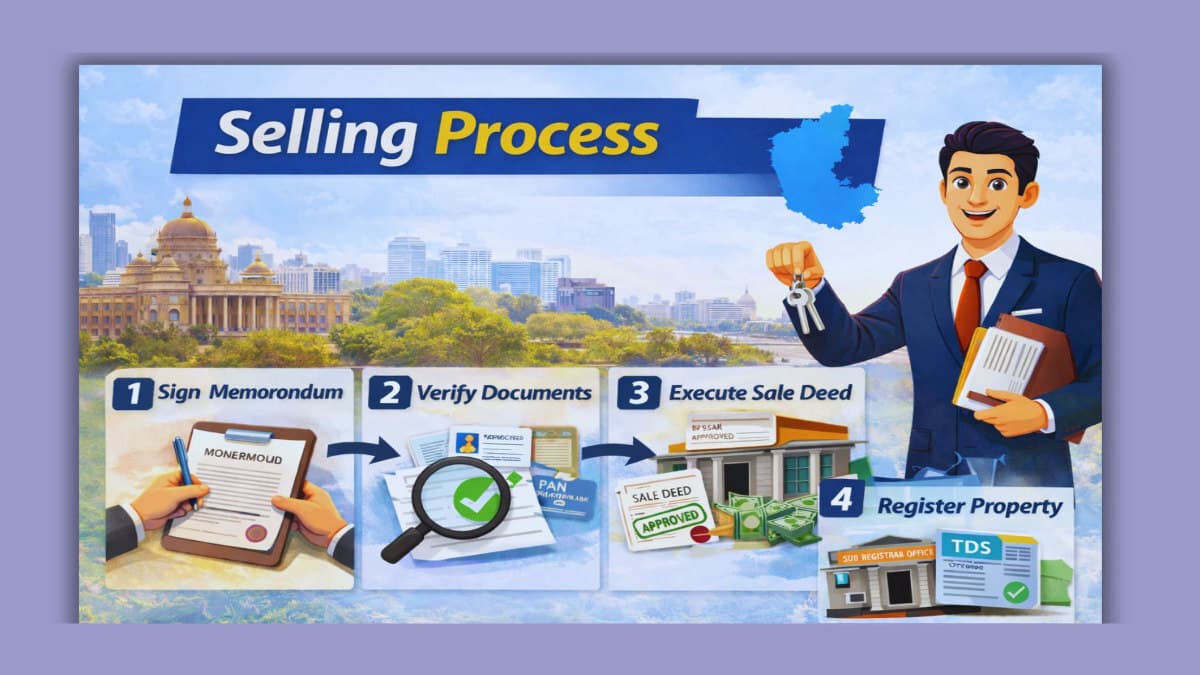
Selling a property in Mumbai???whether a 1BHK in Borivali or a luxury sea-facing flat in Bandra???is a high-stakes game. The real estate market here moves fast, but the legal paperwork is notoriously dense. Unlike other cities where land ownership is straightforward, Mumbai operates largely on the "Co-operative Housing Society" model.
This means you aren't just selling four walls; you are transferring your share certificate and membership in the society. One wrong move with the Society NOC or the Chain of Agreements can stall your deal for months.
This guide covers the A-to-Z of selling residential property in Mumbai, updated for 2026 regulations under the Maharashtra Real Estate Regulatory Authority (MahaRERA).
1. The Pre-Sale Preparation
Before you list your property on a portal, get your house in order???literally and legally.
A. Valuation & Pricing
Don't just guess a price.
- Check the Ready Reckoner Rate (Government Rate) for your area. You cannot register a sale below this value.
- Assess the "Carpet Area" (not Super Built-up). Buyers in Mumbai pay for Carpet Area.
B. The "Chain of Agreements"
This is unique to Mumbai. You must have the original registered agreements of all previous owners.
Example: If Mr. A sold to Mr. B in 1990, and Mr. B sold to you in 2010, you need the original 1990 agreement AND the 2010 agreement. If a link is missing, the bank will reject the buyer's loan.
What if a link is missing? You need to file an FIR for the lost document and get a "Certified Copy" from the Sub-Registrar. Some banks may also ask for an "Indemnity Bond" stating you will handle any future claims.
C. Society NOC
While the law says Society NOC is not mandatory for sale, in practice, banks and buyers insist on it. Apply for a "No Dues Certificate" from your Society Secretary.
2. Essential Documents List
Keep these ready in a file:
- Original Share Certificate: The most important document in a Co-op Society.
- Registered Sale Deed/Agreement to Sale: Your proof of ownership.
- Stamp Duty Payment Proof: The receipt showing you paid tax when you bought it.
- Latest Maintenance Bill: Showing zero arrears.
- Property Tax Receipt: If applicable (mostly for independent houses/bungalows).
- Aadhaar & PAN Card: For KYC.
- Occupancy Certificate (OC): Crucial for buildings constructed after 2010. Read our Legal Documents Checklist for more details.
3. The Step-by-Step Selling Process
Step 1: Memorandum of Understanding (MOU)
Once you find a buyer and agree on a price, sign an MOU or Sale Agreement.
- The buyer pays a "Token Amount" (usually 1 Lakh to 5 Lakhs).
- This freezes the price and gives the buyer time (usually 15-30 days) to arrange funds.
Step 2: Title Search
The buyer's lawyer will issue a "Public Notice" in newspapers inviting claims against the property. They will also search the Sub-Registrar's records for the last 30 years to ensure the title is clear.
Step 3: Paying TDS (1% Rule)
If the sale value is above ???50 Lakhs, the buyer must deduct 1% TDS from the total amount and deposit it with the Income Tax Department against your PAN.
Note: Ensure you collect Form 16B from the buyer as proof.
Step 4: Execution of Sale Deed
This is the final agreement.
- Drafted by a lawyer.
- Includes clauses for indemnity and possession handover.
- The buyer pays the Stamp Duty (currently ~6% in Mumbai) on this document.
Step 5: Registration at SRO
Both parties must visit the Sub-Registrar Office.
- Biometrics: Fingerprints and photos are captured.
- Witnesses: Two witnesses needed.
- Payment: The buyer hands over the final payment DD/Cheque to you in front of the Registrar.
4. Cost Breakdown (Who Pays What?)
In Mumbai, the division of expenses is standard:
| Expense |
Paid By |
Approx Cost |
| Stamp Duty |
Buyer |
6% (Men) / 5% (Women) |
| Registration Fee |
Buyer |
1% (Capped at ???30,000) |
| Brokerage |
Both (Separately) |
1% to 2% of Sale Value |
| Transfer Fee |
Shared (Usually) |
???25,000 (Society Limit) |
| TDS (1%) |
Buyer (Deducted from Seller) |
1% of Sale Value |
5. Post-Sale Formalities (Society Transfer)
The deal isn't over until the Society records are updated.
Submit the following to the Society Manager:
1. Copy of Registered Sale Deed.
2. Share Certificate Transfer Form.
3. Membership Application form from the new buyer.
4. Transfer Fee (???25,000 max).
The committee will approve the transfer in the next AGM/SGM and endorse the new name on the Share Certificate.
6. Capital Gains Tax (For Sellers)
The profit you make is taxable.
- LTCG (Long Term): If held for >24 months. Taxed at 12.5% (new regime).
- STCG (Short Term): If held for <24 months. Added to your income slab.
How to Save Tax (Section 54):
You can avoid paying LTCG tax if you reinvest the capital gains into buying another residential property in India within 2 years (or construct within 3 years). Alternatively, you can invest up to ???50 Lakhs in "Capital Gains Bonds" (NHAI/REC) within 6 months of the sale.
7. Selling a Property with an Existing Loan
Many sellers worry about selling a house that is still mortgaged to a bank. It is completely legal and common.
The Process:
1. Foreclosure Letter: Request your bank for a "List of Documents" (LOD) and a foreclosure letter stating the outstanding amount.
2. Buyer's Payment: The buyer pays the outstanding amount directly to your bank.
3. Release of Documents: Your bank closes the loan, releases the original property documents, and issues a "No Dues Certificate".
4. Handover: You hand over these original documents to the buyer during registration.
Conclusion
Selling property in Mumbai requires patience and paperwork discipline. The "Chain of Agreements" and "Share Certificate" are the two pillars of a clean title. Ensure your dues are clear, your documents are organized, and you deal only via banking channels. A transparent deal is the fastest deal.
Selling in Mumbai?
Don't risk legal hurdles. Get a specialized Property Lawyer to draft your Sale Deed.
Get Seller Support
Frequently Asked Questions (FAQs)
FAQs for Mumbai Sellers
Q1: Can I sell a flat without an Occupancy Certificate (OC)?
Yes, but it is harder. Banks may not give loans to the buyer. You might have to sell at a lower rate to a "Cash Buyer" or investor.
Q2: Is the Society Transfer Fee capped?
Yes. As per the Model Bye-laws of Maharashtra, a society cannot charge more than ???25,000 as a transfer premium. Voluntary donations are different.
Q3: How long does registration take in Mumbai?
With the IGR Maharashtra online appointment system, the physical visit takes about 1-2 hours. The document is usually returned the same day or sent via speed post.
Q4: What is the lock-in period for resale?
There is no lock-in period for general resale. However, if you bought under a government scheme (MHADA/SRA), there might be a 5-10 year lock-in.
Disclaimer: Real estate laws in Maharashtra are subject to change. Always verify the latest Stamp Duty rates and rules on the IGR Maharashtra website.