Introduction
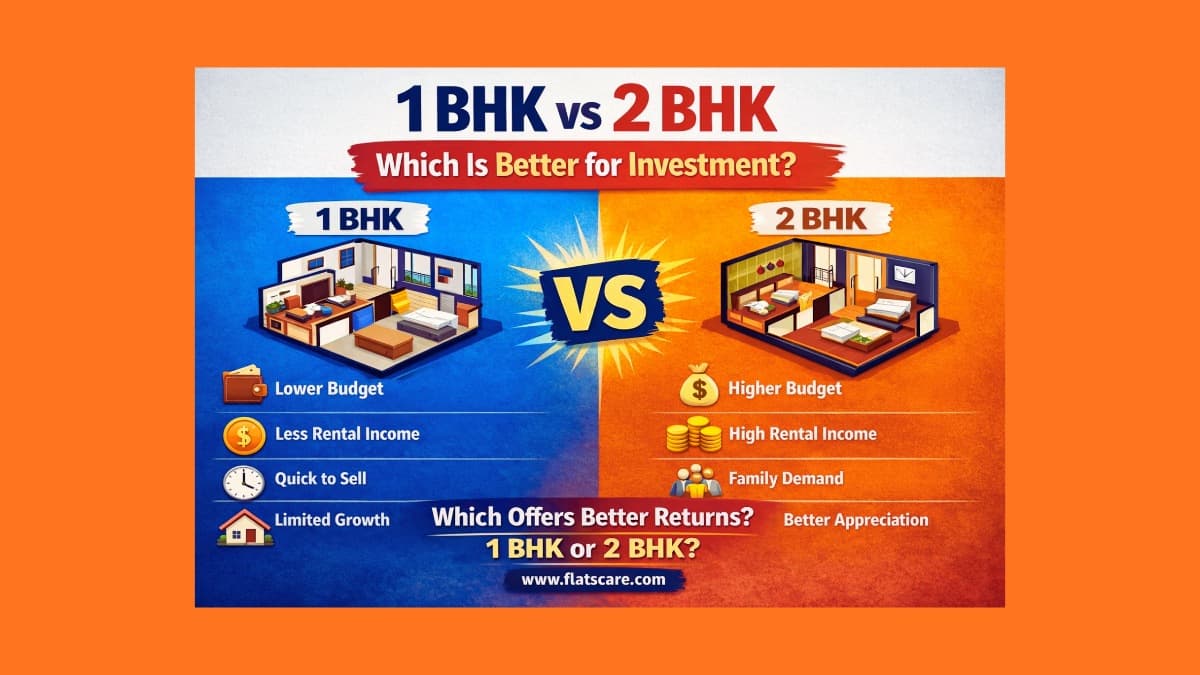
People argue about 1 BHK vs 2 BHK like it???s a lifestyle choice. For an investor, it???s a risk choice: who will rent it, how quickly you can fill a vacancy, and how easy it will be to sell when you???re done.
A 1 BHK can be a smart entry point in areas with steady demand from single professionals and couples. A 2 BHK often feels safer because it fits more tenant types and has a larger end-user resale market. In 2026, the better option is the one that fits your city???s tenant reality and your monthly comfort.
Quick note
This is general information, not financial advice. Local rules, society policies, and market prices can change. Always verify rent reality, maintenance, and resale paperwork before you pay a large token amount.
Detailed explanation: how to think about 1 BHK vs 2 BHK in 2026
Many first-time investors compare only the purchase price and the rent they hope to get. That???s a start, but the real story is simpler: the better investment is the flat that stays occupied, doesn???t drain you with surprises, and still has buyers when you want to exit.
What a 1 BHK does well
A 1 BHK works best when the tenant profile is predictable: single working professionals, couples without kids, or people who want a smaller monthly commitment. In many cities, this demand concentrates around office clusters, universities, and transit-connected pockets.
- Lower entry ticket: easier to start investing and easier to diversify later.
- Often faster to rent: if the area has a strong single-professional tenant pool.
- Lower running costs: usually lower maintenance and lower furnishing spend.
Main risk: in many markets, end-user resale demand for 1 BHK can be narrower. If buyers in that locality typically want a 2 BHK for family living, your resale can depend more on investor demand.
What a 2 BHK does well
A 2 BHK wins on flexibility. It can serve families, roommates, hybrid workers who want a study, and tenants who plan to stay longer. That wider base can make it easier to rent and easier to resell.
- Wider tenant pool: families + working couples + sharing tenants.
- Longer average stays: fewer tenant turnovers can mean lower hassle.
- Stronger resale comfort: more end-users consider 2 BHK the ???default??? size.
The trade-off is cash flow: a 2 BHK ties up more capital. If your budget is tight, a higher EMI or higher down payment can reduce your real return.
Location-specific reality: the same size behaves differently in different cities
Here???s why the 1 BHK vs 2 BHK question changes by city:
- Mumbai: smaller units can rent consistently, but building rules, parking, and access often matter as much as the BHK count.
- Bangalore: 1 BHK demand can be strong near IT corridors, but some societies prefer family tenants, which nudges demand toward 2 BHK.
- Kolkata: practical 2 BHK layouts attract more end-users in many pockets, and paperwork/society discipline affects resale speed.
If you want a city-focused investment view, this guide helps: Best areas to invest in Kolkata real estate (2026).
Important factors (what decides which is better: 1 BHK or 2 BHK)
Instead of choosing by emotion, compare these factors. They tell you whether a 1 BHK or a 2 BHK is the better fit for your investment plan.
A 60-second decision shortcut
- Want the broadest tenant pool and easier resale: start with a 2 BHK that fits your EMI comfort.
- Want a lower entry ticket in an office-heavy pocket: consider a 1 BHK, but only if society rules match your tenant profile.
Rental demand: who is the ???default tenant??? in your micro-market?
In many buildings, the tenant isn???t decided by the city. It???s decided by society rules and the lane. If your building mostly houses families, a 2 BHK rents more naturally. If it???s near offices and the society is comfortable with single tenants, a 1 BHK can move quickly.
???If I list this flat tomorrow, who will call first???? is a straightforward question to pose. Lean 2 BHK if the real answer is ???families.??? If the answer is ???single professionals and couples???, a 1 BHK can work. Also confirm the society???s tenant rules in writing so you don???t learn the hard way later.
Yield vs appreciation: don???t confuse monthly cash flow with long-term value
A smaller unit can sometimes give better rental yield on paper, but appreciation can favor the unit size most end-users want. In many Indian cities, the bigger buyer pool for 2 BHK supports smoother resale, especially in family-oriented localities.
A practical way to compare is to calculate net yield (rent minus monthly costs) and then check whether the EMI still feels comfortable. A 1 BHK can show a slightly better yield in some pockets, while a 2 BHK can offer a cleaner resale if families are the dominant buyers in that lane. Don???t pick a winner using only one number.
Use these tools to compare your shortlist with real numbers:
Vacancy risk and tenant turnover
Vacancy is what quietly wrecks returns. Every empty month is rent lost while your EMI and maintenance still run. A 1 BHK might rent faster in some pockets, but it can also come with higher turnover. A 2 BHK often has longer stays, which can reduce repainting, brokerage, and time spent on frequent handovers.
Society rules: the hidden factor most investors ignore
Some societies restrict bachelors, corporate leases, or sharing tenants. That can shrink 1 BHK demand overnight. Before you decide, confirm society rules in writing, and look at the actual tenant mix in the building today (not the brochure version).
Layout efficiency: usable space matters more than the label
A well-designed 1 BHK with a usable living room and proper ventilation can feel better than a cramped 2 BHK with awkward passages. Compare carpet area (or usable space) and the layout flow: kitchen placement, bedroom daylight, and practical storage. These details decide whether tenants feel comfortable enough to stay.
Exit plan: who will buy this unit from you?
Investors often assume resale will be easy because ???real estate always goes up???. The safer approach is to think about your buyer. In many localities, 2 BHK has more end-user buyers. If you???re investing in a market where most buyers are families, 2 BHK typically gives a cleaner exit.
If you???re buying resale, also keep your paperwork clean. This guide helps you avoid last-minute friction: Flat resale process in Kolkata (2026).
Running costs: furnishing, appliances, and maintenance
Two flats can show the same rent but have very different monthly costs. Treat furnishing and maintenance as part of the deal, not ???later problems???.
Practical tips (how to choose without overthinking)
- Pick your ???primary win???: cash flow now (often 1 BHK) vs flexibility and resale comfort (often 2 BHK).
- Do a rent reality check: confirm actual rents in the same building, not just the area average.
- Budget for furnishing: small flats often rent faster when furnished well.
- Don???t buy awkward layouts: a well-planned 1 BHK can outperform a poorly planned 2 BHK.
- Check carpet efficiency: compare usable space, not just super built-up marketing numbers.
- Use a simple buffer: assume 1 month vacancy per year while calculating returns. If the deal still works, you???re safer.
If you want help reviewing a shortlist or checking papers, contact us.
Conclusion
In 2026, the 1 BHK vs 2 BHK decision is about fit, not hype. A 1 BHK can be a solid investment where single-professional demand is steady and society rules allow flexible tenants. A 2 BHK is often the safer ???all-weather??? choice when you want a wider tenant pool, longer stays, and a stronger end-user resale market.
Pick the unit that matches your city???s tenant reality, your monthly budget, and your exit plan. The best investment is the one you can hold comfortably and sell cleanly when the time comes.
Common Questions (FAQs)
Q1: Which is better for rental income in 2026: 1 BHK or 2 BHK?
It depends on your micro-market. In office-heavy pockets, a 1 BHK can rent fast. In family-heavy societies, a 2 BHK often rents more consistently. Compare net rent after costs, not just advertised rent.
Q2: Is 2 BHK always better for resale?
Not always, but many localities have a bigger end-user pool for 2 BHK, which can make resale smoother. The exact outcome depends on building quality, layout, and paperwork.
Q3: How do I compare 1 BHK vs 2 BHK returns properly?
Calculate net yield (rent minus monthly costs), factor vacancy, and check EMI comfort. Tools like an EMI and rental yield calculator can help you compare two options quickly.
Q4: What???s the biggest hidden risk when investing in a 1 BHK?
Society restrictions and tenant profile mismatch. If the society dislikes bachelor tenants or sharing tenants, demand can drop. Always confirm rules and current tenant mix before buying.