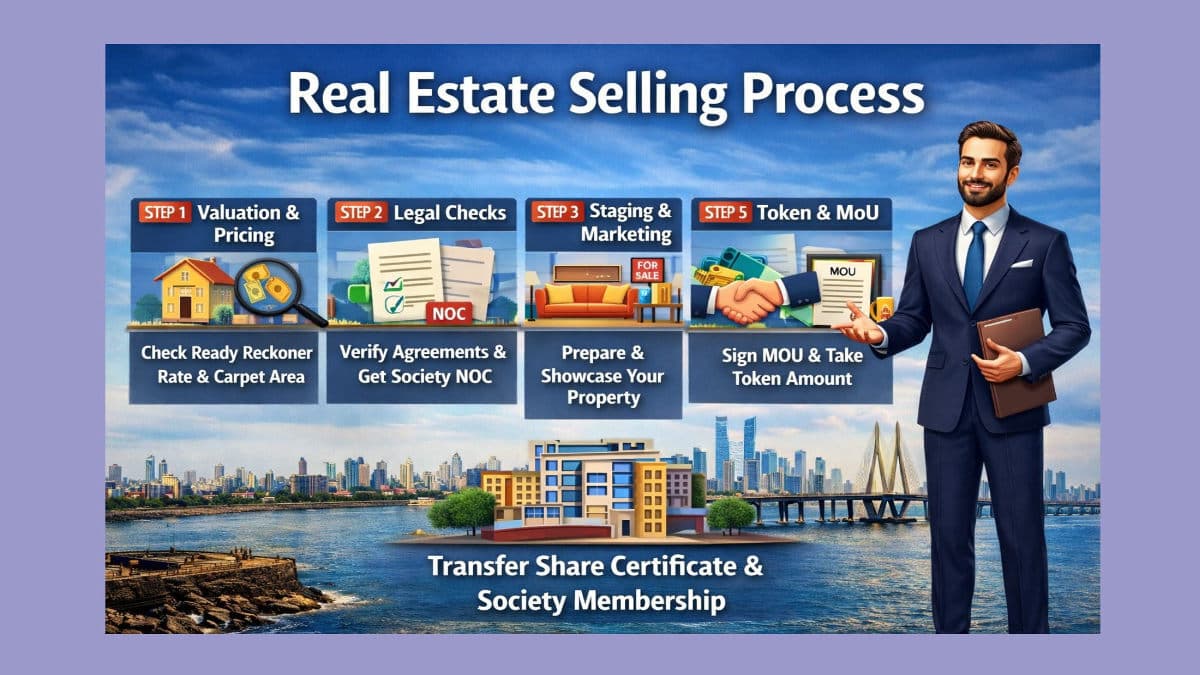
Selling a flat in Mumbai looks simple from outside: list it, find a buyer, sign, register, hand over keys. In reality, the process is mostly file work. If your documents are clean and you respond quickly to the buyer's lawyer, the deal moves. If your file is messy, everything becomes slow and negotiable.
This guide covers the real estate selling process in Mumbai in a simple order, from pricing to registration and handover. If you are an NRI seller, read the NRI selling guide as well because TDS and payment handling can be different.
Before you list (quick seller checklist)
Do this once before you talk to brokers or portals. It saves time later because you can answer questions the moment a serious buyer appears.
- Sale deed and index details: keep the registered sale deed and registration details ready.
- Society papers: share certificate, latest maintenance bill, and a no-dues letter if possible.
- Property tax: keep the latest paid receipt or payment confirmation.
- Loan status: if you had a home loan, keep the closure letter and lien removal/no-dues documents ready.
- Parking clarity: confirm what parking right you can transfer (deed wording and society records matter).
- Flat facts: RERA carpet area, floor, facing, building age, and major repairs done.
- Inclusions: decide what stays (ACs, wardrobes, modular kitchen, appliances) and list it clearly.
- Occupancy: vacant, self-occupied, or tenant. If tenanted, keep the agreement and a clear vacate plan.
Keep a scanned PDF folder ready for due diligence. Share copies with serious buyers and keep originals safe. Hand over originals only at closing as per your agreement. If you use a broker, keep brokerage terms written. It avoids friction.
Step 1: Price your flat (valuation)
Do not price your flat using only portal listings. Those are asking prices. Use these checks to get closer to a realistic range:
- Recent registrations: check registered values of comparable flats on IGR Maharashtra for your micro-location.
- Floor, view, and parking: these three change pricing quickly in Mumbai. Compare like-for-like.
- Carpet area clarity: quote the RERA carpet area. Buyers compare carpet-to-price, not super built-up marketing numbers.
If your pricing is slightly higher than nearby deals, justify it with something real: better parking, better view, newer interiors, or a cleaner legal file. Buyers will negotiate anyway, but clear reasoning keeps negotiations sane.
Step 2: Clean your file (legal and society hygiene)
Before you accept a serious offer, clean up your file. Missing paperwork does not always kill a deal, but it slows the buyer and gives them negotiation leverage.
Chain of agreements
Confirm the complete chain of transfer documents up to your name. If any link is missing or unclear, speak to a property lawyer before you sign a strict timeline with a buyer or bank.
Clear dues
- Society maintenance: get no-dues / maintenance clearance.
- Property tax: keep the latest receipts ready.
- Electricity: keep recent bills and payment proof.
Step 3: Prepare the flat for visits (marketing)
You do not need expensive staging. You need the flat to look clean, bright, and easy to imagine living in.
- Declutter: remove excess furniture and personal items so rooms feel larger.
- Fix basics: leaking taps, loose switchboards, stuck windows, and visible seepage marks.
- Lighting: keep bulbs working so the flat looks decent during evening visits.
Step 4: Offer and token (put it in writing)
Once you find a serious buyer, they may pay a token amount as good-faith money.
- Receipt: issue a written receipt with amount, date, and mode of payment.
- Refund terms: write clear conditions for refund or forfeiture. Keep it simple and specific.
Step 4.5: Screen the buyer before you block your flat
Many sellers lose weeks because they stop showings too early. Before you accept a token and reject other buyers, do a quick sanity check:
- Loan vs no loan: if the buyer needs a loan, ask which bank and whether the bank has started processing.
- Funds readiness: confirm how they will pay the token and the next milestone amount (not just the final day).
- Who is signing: confirm the buyer names that will appear on the deed (and if anyone is abroad or needs POA).
- Timeline: ask for a realistic date for agreement signing and registration, then align it with your society process.
- Due diligence approach: a serious buyer will share a lawyer timeline and a document list early.
Typical Mumbai resale timeline (realistic flow)
- Day 1 to 7: you share document copies, buyer lawyer starts due diligence.
- Week 2 to 4: buyer finalises loan file and valuation/technical checks (if loan).
- Week 3 to 6: agreement signing, society paperwork moves in parallel.
- Week 5 to 8: registration slot booking, stamp duty prep, final payment planning.
- Closing week: registration + possession letter + keys handover (only after payment confirmation).
Step 5: Agreement for sale / MoU
This sets the timeline. If the buyer is taking a home loan, keep realistic time for approvals and legal checks. Every bank and every file is different, so avoid unrealistic deadlines.
- Total sale price: mention the final price and how any taxes like TDS will be handled (if applicable).
- Payment schedule: tie payments to clear milestones (agreement signing, registration, possession).
- Possession terms: possession date, society transfer cooperation, and keys handover conditions.
- Items included: list ACs, wardrobes, modular kitchen, and appliances if they are part of the deal.
Step 6: Society process (NOC, forms, transfer)
Many societies ask for NOC and transfer paperwork as part of the resale process. Requirements vary, so confirm the exact list early with your secretary or managing committee.
Common documents societies ask for:
- Copy of agreement for sale / MoU
- Membership forms (often Appendix 20 forms)
- No-dues / maintenance clearance letter
Some societies ask for extra contributions beyond transfer fees. Do not treat it as a last-minute surprise. Discuss it early and keep payments documented through proper receipts.
Step 7: TDS and tax basics (do not skip this)
TDS depends on the sale value and the seller's residency status. Treat this as a compliance step, not an afterthought.
- Resident seller: for many sales above the threshold, buyers deduct TDS and deposit it using the required forms.
- NRI seller: TDS handling can be different and higher. Use the NRI guide and align with a CA early.
Seller's job: collect proof that TDS was deposited and the TDS certificate (when applicable). It keeps your records clean and avoids future follow-ups.
Step 8: Registration day (closing)
Registration happens at the Sub-Registrar Office (SRO). Expect delays and keep buffer time. See our Property Registration Guide for a walkthrough.
Simple closing rule: do not sign the final deed until DDs are in hand or the bank transfer is confirmed as per your agreement.
Quick closing checklist:
- Carry originals that your lawyer asks for, and keep photocopies ready for society/bank.
- Verify buyer and seller name spellings on DDs/RTGS details before signing.
- Keep two witnesses who can stay till the process ends.
- Hand over keys only after payment confirmation and sign a simple possession letter with date and time.
- Note basic meter readings (electricity) and hand over any access cards/remotes mentioned in the deal.
Step 9: After sale (transfer the records)
Once the deed is registered, finish the remaining transfers so bills and society records do not stay in your name.
- Society transfer: follow the official property transfer process for share certificate update.
- Electricity: transfer the meter to the new owner's name with the required utility documents.
- Property tax: apply for name change in property tax records as per local process.
Common mistakes that delay Mumbai deals
- Missing originals or unclear chain: banks and lawyers slow down immediately.
- Parking promises: confirm what parking right transfers, and keep it consistent with your deed and society records.
- Tenant mismatch: unclear vacate plan reduces buyer confidence and can affect loan approvals.
Conclusion
A smooth Mumbai sale is paperwork and timing. Keep your file ready, keep society steps moving, and document every payment milestone. When the buyer sees a clean file, they waste less time and your negotiation stays stronger. If you are selling to move to a rental, check the latest 2 BHK rents in Mumbai.
Need Help with Documentation?
Get a property lawyer to verify your "Chain of Deeds" before you list your flat.
Verify My Documents
Frequently Asked Questions (FAQs)
Seller Queries Answered
Q2: Can I sell if I have an ongoing home loan?
Yes. Many resale deals happen with an ongoing loan. Usually, the buyer (or buyer's bank) pays the outstanding amount to your bank as part of closing, and the remaining amount comes to you. Your lawyer and the bank will guide the exact steps and documents.
Q3: How much commission does the broker charge?
Brokerage varies by area and deal size. Many transactions fall in the 1% to 2% range (plus GST), but negotiate and lock it in writing before you accept an offer.
Q4: Is the sale agreement valid without registration?
An agreement for sale is a contract, but it does not transfer ownership by itself. Ownership transfers through a registered sale deed. Registration requirements for agreements can vary by situation, so follow your lawyer's advice and avoid informal or unclear paperwork.
Q5: What happens if the buyer's loan gets rejected?
If the rejection is due to your property's title issue (e.g., illegal extension), you must refund the token. If it's due to the buyer's poor CIBIL score, you can forfeit the token (if mentioned in the receipt).