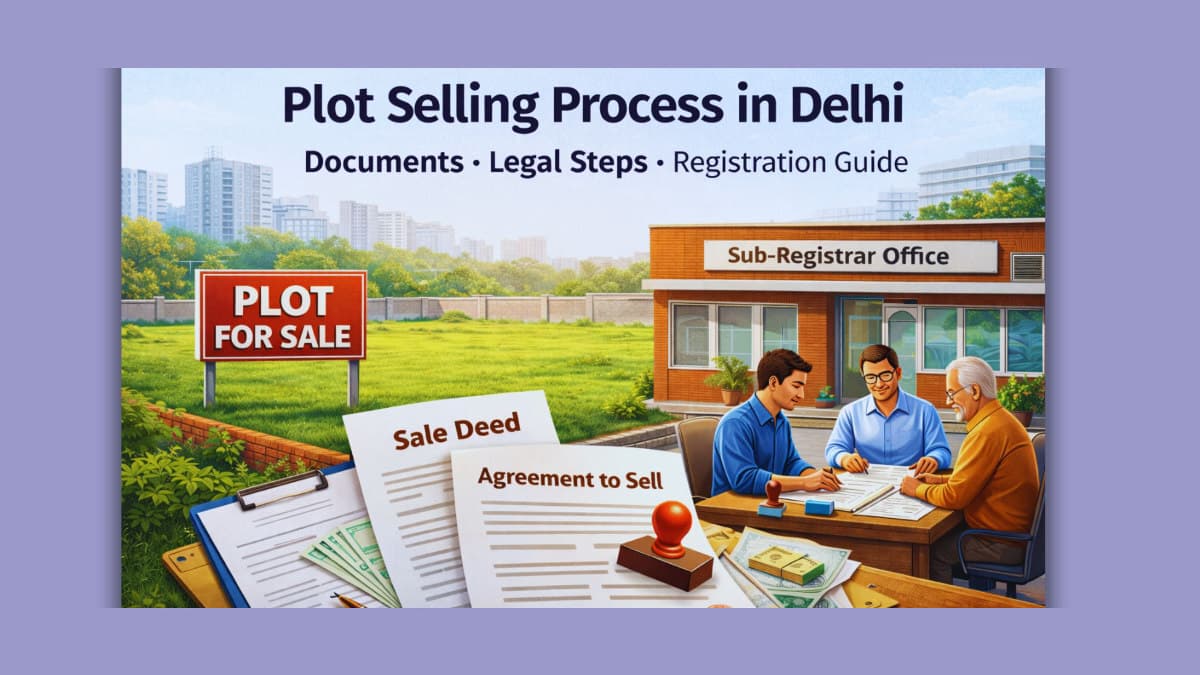
Selling a residential plot in Delhi is rarely ???hard??? because of the buyer. It gets hard when the paperwork story and the site story don???t match. Most buyers decide quickly when three things are clear: who owns it, where the boundary sits on the ground, and whether possession is actually vacant.
This guide follows the order that usually keeps a Delhi plot sale smooth: get your file ready before you list, keep token terms written, share a clear document set early, and go into registration day with a final deed draft that matches IDs and the plot description.
Note: This is general information, not legal or financial advice. Land history varies widely (DDA allotments, inherited plots, joint ownership, boundary disputes, encroachment risks, and different land-use rules). If any part of the chain or possession is unclear, take qualified help before accepting a large advance.
Action + Property + Condition + Location (search intent map)
Most people search plot sales as an action plus the problem they want to avoid. These are common search-style phrases in Delhi.
- Sell | residential plot | clear title + vacant possession | Delhi
- Check | circle rate | colony category + registration value | Delhi
- Prepare | plot documents | chain papers + tax receipts | Delhi
- Register | sale deed | stamp duty paid + witnesses present | Delhi
- Handle | NRI plot sale | POA + compliant payment trail | Delhi
Who this guide helps
- Seller: Build a clean title file and avoid last-minute objections at registration.
- Buyer: Know what to verify before paying token money and booking a slot.
- Tenant/occupant: Understand what should be written if the plot is being used.
- General user: Use the steps as a Delhi plot sale checklist.
Before you list: four checks that save time
1) Title and ownership history (chain clarity)
Start with your latest ownership document, then gather the chain papers that explain how the plot reached you. If it is inherited or jointly owned, confirm early who will sign and whether every owner can appear for registration.
2) Plot identification, boundaries, and access
For plots, the description on paper must match what a buyer can see on-site: boundary markers, neighbouring sides, and the access route. If the plot is unfenced, take clear photos and short videos of all sides and note any corner points or permanent nearby structures that help identify it.
3) Possession reality
Vacant can still mean in use in real life (parking, storage, caretaker, seasonal farming, a shed). If anyone uses the land, write down what the arrangement is and the end date. Buyers get nervous when possession is unclear, even if the price is good.
4) Circle rate and registration value
Delhi has notified circle rates by colony category. Many buyers and sellers check these before finalising the registration value. Use the official circle rate reference instead of guessing: Delhi Revenue Department. If you are close to guidance value, check the latest notification before you lock the numbers.
Step-by-step plot selling process in Delhi
Step 1: Create a one-page plot summary
Before sharing the plot with brokers or WhatsApp groups, make one page that stays consistent. Serious buyers usually forward it to family and a lawyer.
- Location: Colony/sector + nearest landmark.
- Area: Plot size as per deed and the unit used.
- Boundaries: What is on each side today.
- Access: Main approach and last-lane reality.
- Ownership: Names of owners who will sign and their availability.
- Status: Vacant or in use (with a written handover plan).
Step 2: Organise the title file before taking token money
Token money is common in Delhi, but it works best after the basic file is ready. Otherwise it creates pressure to solve missing documents on a deadline.
Keep a single folder (soft + hard copies) with:
- Latest ownership deed/allotment/transfer document
- Supporting chain papers (as needed)
- IDs and PAN for all signers
- Recent tax/payment receipts relevant to the plot
Step 3: Agree on token terms in writing (Agreement to Sell)
Before you block a date, write down the basics: what is being sold, the total consideration, payment schedule, the target registration window, and the possession handover date. Keep token payments traceable and keep a receipt or acknowledgement.
Many disputes happen because timelines were verbal. If the buyer needs a loan, build buffer time and keep document-sharing milestones clear.
Step 4: Check whether the plot is freehold or needs conversion
In Delhi, many older allotments and authority-linked plots have specific transfer conditions. If the plot is leasehold or has restrictions, conversion or permission steps may apply before a clean transfer is possible. Use official sources and the authority???s portal where applicable. For DDA-linked plots and services, start from DDA.
Do not assume every plot needs conversion. Do not assume every plot can be transferred the same way. The safest approach is to match the plot???s document type and authority rules to the transaction plan.
Step 5: Prepare the document set a buyer will ask for
Exact requirements vary by plot history, but buyers commonly ask for a clean, explainable file.
Seller identity and signer documents
- Photo ID: Aadhaar / Passport / Voter ID / Driving Licence for each signer
- PAN: commonly requested for tax and payment compliance
Ownership and title chain
- Primary ownership document: Sale deed / conveyance deed / allotment letter + transfer papers (as applicable)
- Supporting chain papers: prior transfers, partition or inheritance papers where applicable
Plot description and site reality proof
- Clear land description: plot area, boundaries, and any boundary wall/fencing notes
- Photos/videos: all sides, access lane, and visible markers
- Possession note: vacant or current use with end date
Taxes and dues (where relevant)
Keep whatever receipts and no-dues papers apply to your plot type and locality. Buyers often ask for these early because it signals whether the property file is maintained.
Step 6: Plan payments and the TDS step (keep the trail clean)
Large property transactions work best with a clean payment trail. Agree on payment mode and schedule early, and keep acknowledgements.
In many property purchases in India, the buyer may have a TDS obligation depending on transaction value and status. For the official overview of property-related TDS provisions, refer to the Income Tax Department???s guidance on Income Tax e-filing portal.
If you are an NRI or selling from abroad, documentation and banking compliance often require extra steps. Use the NRI property selling guide before you accept a firm token.
Step 7: Registration at the sub-registrar office
On registration day, the seller, buyer, and witnesses typically appear with identity proofs. Biometric/photo capture is common. Small mismatches (spelling differences, missing signer, missing witness ID, unclear plot description) can waste the slot.
To reduce delays, do a final deed read-through one day before and verify that signer details match their IDs.
Step 8: Possession handover and closing file
After registration, keep a closing set: deed copy as received through the process, payment acknowledgements, and a possession handover note with date and signatures. If the plot has a gate or boundary wall access, record key handover as well.
Common Delhi plot sale problems (and how sellers avoid them)
- Unclear boundaries: Buyers slow down if the boundary story changes between papers and site visits.
- Missing chain papers: Older plots need a clearer ownership story, especially for buyer loans.
- Informal use of the land: Write the use and end date down instead of relying on verbal understanding.
- Assuming one standard process: DDA/authority-linked plots and private plots can have different document flows.
- Rushing the token stage: Token money should follow basic file readiness, not replace it.
Typical timeline (what usually takes time)
Delhi plot transactions rarely move in one straight line. Timing depends on how old the plot file is, whether multiple owners are involved, and whether the buyer needs a loan. A simple way to plan is to treat the deal as a few separate blocks.
- File readiness: Collecting chain papers, IDs, and receipts often takes days to a couple of weeks, especially for inherited plots.
- Buyer verification: Site visits, boundary matching, and lawyer queries can take one to a few weeks depending on complexity.
- Registration planning: Draft finalisation, payment scheduling, and slot coordination usually takes a few days once both sides are aligned.
If you want the process to feel predictable, keep the deal terms and document-sharing timeline in writing, and avoid fixing a registration date until the basic checks are complete.
Related guides
For a broader Delhi property context and planning, these references can help:
Conclusion
The plot selling process in Delhi becomes simpler when you treat it as paperwork plus site reality. Keep the title chain clear, match boundaries and access to what a buyer can see on-site, document possession status in writing, and verify circle rate guidance from official sources before you book a registration slot. A clean file reduces negotiation friction and helps the transaction close on schedule.
FAQs
Q1: Can I sell a plot in Delhi if the plot is being used by someone?
Yes in many cases, but buyers want clarity on possession. If anyone is using the land, put the arrangement and handover date in writing before you take a large advance.
Q2: Do I have to sell at circle rate in Delhi?
Circle rate is used as a reference for registration value in many cases. The right way is to check the latest notified guidance for your colony category on the Delhi Revenue Department portal and structure the transaction accordingly.
Q3: What is the most common reason a Delhi plot sale gets delayed?
Unclear ownership chain and unclear boundaries are common reasons. The fastest way to avoid delay is to organise the title file and boundary story before accepting token money.
Q4: What should I verify before signing an Agreement to Sell?
Verify the ownership papers, signer availability, possession status, and the basic registration plan (timeline, payment schedule, and which documents will be shared by when). Keep token terms in writing and keep payments traceable.