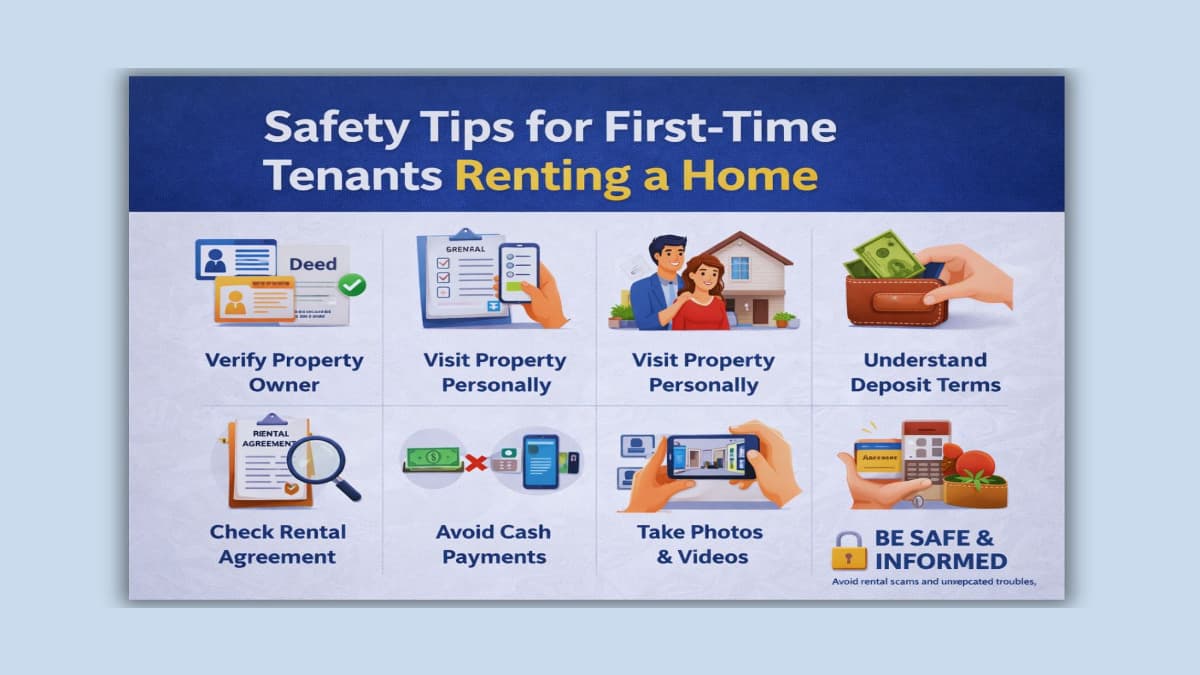
Moving out of your parents' house or college dorm into your first rented apartment is a rite of passage. The freedom is intoxicating???no curfew, your own decor, your rules. But for thousands of first-time tenants in cities like Bangalore, Mumbai, and Delhi, this dream often turns into a nightmare of lost deposits, creepy landlords, and legal loopholes.
The rental market is largely unregulated and filled with sharks waiting for inexperienced renters. From "fake owners" vanishing with token money to landlords deducting 50% of the deposit for "painting charges," the risks are real.
This guide is your survival kit. We cover everything from spotting scams to the exact clauses you need in your rental agreement to protect your money and your peace of mind.
1. The "Fake Owner" Scam (And How to Spot It)
This is the #1 scam in 2026. You see a beautiful flat listed online at a shockingly low price. You call the number. The "owner" says he is in the Army or abroad and cannot show the house physically.
The Trap: He asks you to transfer a "small token amount" (???2000 or ???5000) to send you the gate pass/keys via courier.
The Safety Rule:
1. NEVER pay a single rupee until you have physically visited the property.
2. Verify Ownership: Ask to see the Electricity Bill or Property Tax receipt. If the name on the bill doesn't match the person asking for money, walk away.
2. Verifying the Property Documents
Just because someone has the keys doesn't mean they are the owner. They could be a previous tenant running a sub-letting scam. Always cross-check with our Legal Documents Checklist.
What to Check:
- Utility Bills: Ask for the latest BESCOM/TNEB/MSEDCL bill.
- ID Proof: Ask for the landlord's Aadhaar card and ensure it matches the name on the utility bill.
- POA: If the owner is an NRI, the person signing the agreement MUST have a valid Power of Attorney (POA). Don't sign with a "cousin" or "friend" who has no legal authority.
3. The Rental Agreement: Your Only Shield
A verbal promise is worth nothing in court. You need a Registered Rent Agreement. (Read our Rental Agreement Guide for the full format).
Critical Clauses to Include:
- Lock-in Period: First-time tenants often miss this. If you sign a "6-month lock-in" and lose your job in Month 2, you still have to pay rent for the remaining 4 months. Negotiate for a Zero Lock-in or minimal (1 month) lock-in. Pro-tip: Add a 'Force Majeure' clause that allows exit without penalty if you lose your job due to layoffs.
- Notice Period: Standard is 1 month. Some greedy landlords sneak in "3 months." Ensure it is mutual???if he asks you to leave, he must also give you notice.
- Deduction Logic: Explicitly state that "Normal wear and tear shall not be deducted from the deposit."
4. Security Deposit Protection Strategies
In cities like Bangalore, the deposit is massive (5-10 months' rent). That's ???2-3 Lakhs of your hard-earned money at risk.
The "Pre-Move-In" Documentation:
On the day you get the keys, take your phone and record a slow, high-resolution video of the entire house.
- Zoom in on broken tiles.
- Record leaky taps.
- Photograph scratches on the wardrobe.
Action: Email these photos to the landlord immediately with the subject line: "Condition of Flat 303 upon handover - Date." This digital timestamp prevents him from blaming you for old damages when you move out.
5. Physical Safety Checklist (The Site Visit)
Don't just look at the view from the balcony. Check for safety.
1. The Lock Change Rule
The previous tenant, the maid, the broker, and the painter???all might have copies of the main door key.
Safety Tip: Ask the landlord for permission to change the lock cylinder immediately after moving in. Give him one spare key (sealed in an envelope if you prefer), but ensure you control access.
2. Neighborhood Safety
Visit the area at 9:00 PM.
- Is the street well-lit?
- Are there people walking around?
- If you are a single woman, check the distance from the main road to your building gate. Avoid isolated lanes.
3. Privacy Invasion
Look for hidden cameras in "furnished" flats. Check smoke detectors and AC vents. Also, ensure there are no CCTV cameras pointing directly into your balcony or windows from neighboring buildings.
6. Hidden Costs: Budgeting Beyond Rent
Your rent is ???20,000. But your monthly outflow might be ???28,000. Why?
- Maintenance: Is it included in the rent? In large societies, this can be ???3,000-???5,000 extra.
- Water Charges: In water-scarce areas (like Whitefield or Varthur), tanker bills are split among residents. This can add ???1,500/month in summer.
- Brokerage: Standard is 1 month's rent. Don't pay this until the agreement is signed.
7. Police Verification: It protects YOU too
Many tenants think Police Verification is a hassle. It is actually a safety layer. It creates an official government record that you reside there. If you face harassment from neighbors or the landlord, this record proves your legal tenancy. Learn more about the process in our Tenant Verification Guide.
8. Move-In Day Protocols
The day you shift is chaotic. But do these three things:
- Meter Reading: Photograph the electricity and gas meter readings. Send them to the landlord. You should not pay for the previous tenant's AC usage.
- Deep Clean: Even if it looks clean, pests hide in corners. A professional pest control session before unpacking boxes is worth the ???1,000 investment.
- Test Points: Plug a phone charger into every socket. Flush every toilet. Turn on every geyser. If something doesn't work, report it within 24 hours.
9. Dealing with Brokers Safely
Brokers are often unavoidable in major cities.
Red Flag: If a broker asks for a "Registration Fee" or "Visiting Fee" just to show you houses, run. Legitimate brokers only charge commission on success.
Negotiation: Never reveal your desperation. If they know you need to move in by the 1st, they will hike the rent.
Conclusion
Renting your first home is an adventure. Don't let fear paralyze you, but don't let excitement blind you either. Treat the rental process as a business transaction. Verify documents, document damages, and never pay cash without a receipt. Your safety???financial and physical???is your responsibility. Trust your gut; if a landlord feels overbearing or a deal feels too good to be true, it probably is.
Frequently Asked Questions (FAQs)
FAQs for First-Time Tenants
Q1: Can the landlord enter my house anytime?
No. Once rented, it is your private space. The landlord must give prior notice (usually 24 hours) before visiting. Sudden intrusion is a violation of your privacy rights.
Q2: Is the security deposit refundable?
Yes, it is fully refundable after deducting valid dues (unpaid rent, damages). "Painting charges" are a common dispute point???clarify this percentage in the agreement itself.
Q3: Can a bachelor be refused a home?
Legally, housing societies cannot discriminate based on marital status, but practically, they do. It's better to look for "Bachelor-friendly" societies or co-living spaces. Read our Bachelor Renting Guide.
Q4: What if I lose my job and can't pay rent?
You cannot be evicted overnight. Due process must be followed. However, you are liable to pay the rent for the duration you stay. Communicate early with your landlord and check our Eviction Rules Guide.
Disclaimer: This guide is for educational purposes. Rental laws vary by state (e.g., Maharashtra Rent Control Act vs Karnataka Rent Control Act). Always consult a lawyer for specific disputes.